 Screen time
- ADHD
- 3 min read
How to focus with ADHD: 9 adjustments that don't rely on willpower
Generic productivity advice assumes you decide to focus and then focus. Nine environment and routine adjustments that don't depend on that in-the-moment decision.
By Offimo Team · updated October 22, 2026
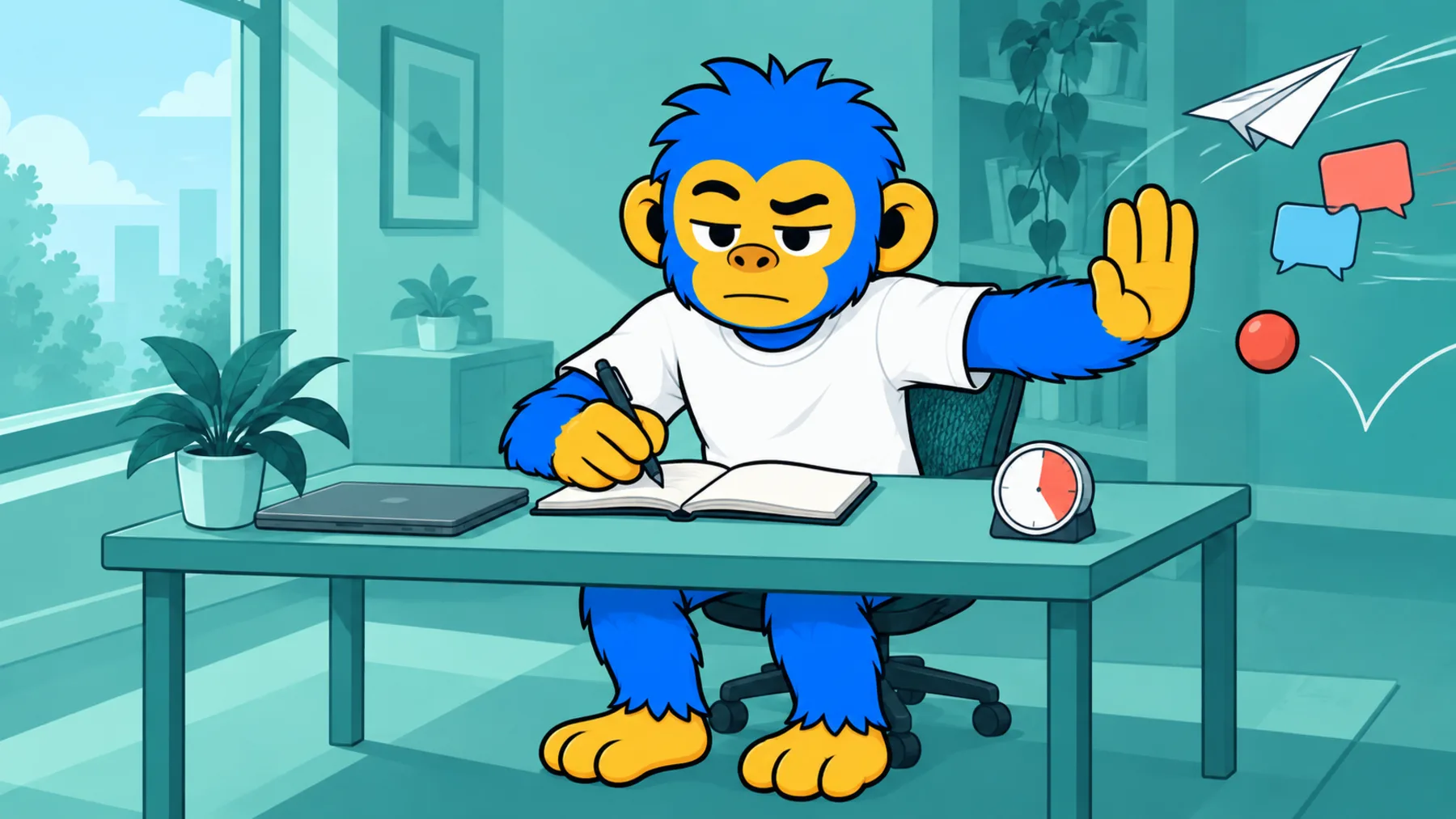
A lot of productivity advice assumes you decide to focus and then focus. For many people with ADHD, that step in the middle doesn't work on demand. The answer that shows up most in people's accounts is the same: set up the environment so focus doesn't depend on the decision of the moment. The nine adjustments below follow that logic. Pick one and start with it.
Nothing here replaces professional assessment and care. These are environment and routine adjustments, not treatment, and this page doesn't diagnose. It also carries no study of its own: these are practices described by people who live with ADHD.
1. Make starting cheaper than the task
Often the obstacle is the first move, not the whole task. Shrink the start to something almost silly: open the file, write one bad sentence, gather the materials. Agree with yourself that only that counts. If the rest follows, good; if not, you still moved.
2. Use short blocks with a visible timer
A near deadline tends to weigh more than a distant one. Try blocks of 15 to 25 minutes with a timer in view, instead of "work all morning". A visible end helps hold your attention until you get there.
3. Take the decision out of the way
"I'll avoid Instagram today" is a decision you remake every ten minutes. An active block is a decision made once. If your problem is deciding again and again, swap the promise for a barrier.
4. Get out of your head what can sit in view
A list in view, the next step written down, a timer on the desk. What lives only in memory competes with the task for room and slips away easily.
5. Try body doubling
Working near another person, in the room or on a silent call, helps many people stay on task. No one has to check on you: their presence changes the context.
6. Give breaks a marked end
A break with no end becomes the rest of the afternoon. Set a timer and, if you can, don't take the break on your phone, which has no natural end.
7. Pair the boring with something stimulating
Instrumental music, background noise, walking while you think, or changing seats can make a monotonous task easier to hold. Test and keep what works for you.
8. Let the environment carry the rules
If the app is one tap away, it will get opened. If the desk holds only the task's materials, the task starts. Rearranging the environment often pays more than a promise made the night before.
9. Plan for the relapse
You will lose days. Decide in advance the first task of the next day, without reviewing everything that slipped. A plan that only works when everything goes right won't survive the week.
Where Offimo comes in
Adjustments 3, 6 and 8 touch your phone. On iPhone, Offimo puts a pause of a few seconds before an app you've protected opens, and the screen offers to close the app or ask for access. That takes the repeated "open it or not" decision out of the way. It isn't treatment, and we don't know of a study showing this effect specifically in ADHD.
For today, pick adjustment 1 and apply it to the first task you've been putting off.
Frequently asked questions
Do these adjustments treat ADHD?
No. They are environment and routine adjustments that many people with ADHD report helping, and they don't replace professional assessment and care.
Do I need to do all nine?
No. Pick the one that fits today's task best and see whether it helps before adding another.
Does an app blocker help with ADHD?
It can take a repeated decision out of the way, like 'I'll avoid Instagram', but this page has no study showing that for ADHD. The studies on pauses and limits that we cite on the site weren't run with this group.
Keep reading
Screen time Digital detox
 Social media



















The next quick look is going to happen.
This time, we'll be there to help! You get to choose.
7 days free · iPhone with iOS 18 or later