 Digital detox
- Wellbeing
- 4 min read
Dopamine and social media: what the science says and doesn't
Dopamine isn't the pleasure molecule, and the 'dopamine detox' has no study behind it. What research shows about anticipation, variable rewards and what actually cuts use.
By Offimo Team · updated October 22, 2026
Someone in your feed has said social media gives you "dopamine hits" and that the way out is a "dopamine detox". Both phrases are everywhere. Neither comes from a study about social media.
The short answer: dopamine has more to do with wanting than liking, the feed works in part because it's unpredictable, and what has studies behind it for cutting use is a rule set in advance and a pause at the moment you open the app, not three days without your phone.
What the research supports and what is popular writing
| The popular line | What research describes | Can you conclude it? |
|---|---|---|
| "Dopamine is the pleasure molecule" | Dopamine is tied more to seeking and expectation than to pleasure itself | No, pleasure involves other systems |
| "Social media gives you dopamine hits" | No dopamine measurement while scrolling a feed in the studies cited here | No, it's an analogy |
| "I need a dopamine detox" | No cited study shows days without a phone recharge dopamine | No |
| "Limits and pauses cut use" | Measured in experiments on behaviour | Yes, with limits (see below) |
Dopamine, anticipation and "wanting"
In experiments with monkeys, Schultz, Dayan and Montague (Science, 1997) showed that dopamine neurons respond to the difference between the expected reward and the received one. When something good arrives unannounced, they fire. When a cue comes to announce the reward, the response shifts to the cue. The reading that stuck is that dopamine has to do with prediction and seeking, not only with satisfaction.
Berridge and Robinson (Brain Research Reviews, 1998) separate two things ordinary language blurs: wanting something and liking it. For these authors, dopamine weighs more on the wanting. That's why "dopamine is pleasure" doesn't match the data.
What that lets you say about the feed is limited. You can say a system tied to expectation fits a screen that always offers the next thing. You can't say anyone measured that during a social media scroll.
Why the feed keeps paying only sometimes
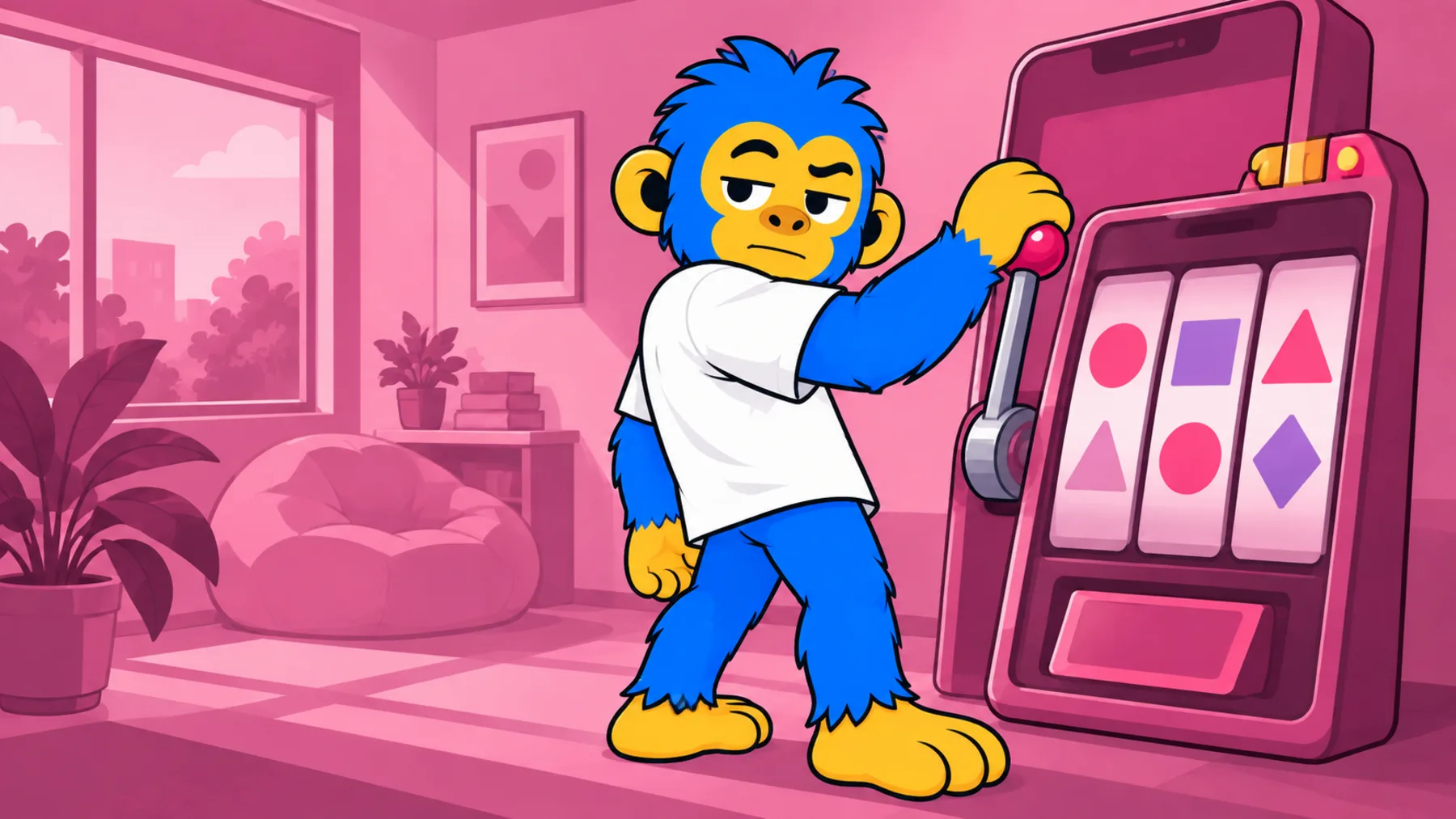
Ferster and Skinner (Schedules of Reinforcement, 1957) described that rewards delivered unpredictably, on variable-ratio schedules, sustain fast, steady responding and take longer to extinguish. It's the schedule usually associated with slot machines.
Applying it to the feed is an analogy: sometimes a scroll brings something good, most times it doesn't, and it's the chance of the next one that keeps the thumb moving. No one tallies a feed's payoff the way you tally a machine's, so treat it as a model, not proof.
What a "dopamine detox" isn't
The phrase assumes dopamine is a stock your phone drains and a few days without it refill. None of the sources above describe that. Time away from your phone can be good for other reasons, like sleeping better or talking without a screen, but "recharging dopamine" isn't an explanation the research supports.
What cut use, measured
According to Allcott, Gentzkow and Song (American Economic Review, 2022), 31% of social media use came from self-control problems, not from wanting to be there. When people could set limits on their own future screen time, their use fell substantially. What worked was a rule chosen in advance.
According to Grüning and Lorenz-Spreen (PNAS, 2023), 280 participants used the one sec app for six weeks, which puts a one-second pause before certain apps open. 36% of the time, people closed the app instead of opening it, and by week six, attempts to open them were 37% lower than in week one. The study measures openings, not screen time, and it tested one sec, not Offimo.
The full figures and sources are on the science page.
What to do with this
Anticipation happens in the gesture of picking up the phone and opening the app, so that's where a barrier has the most effect. Three changes, from lightest to firmest:
- Turn off content notifications (likes, suggestions, "you missed") and keep the ones from people. In Settings → Notifications.
- Take social apps off your first screen, via Remove App → Remove from Home Screen, so you have to search for them.
- Put a pause before the app opens. Offimo does this on iPhone: when you try to open an app you've protected, it holds access for a few seconds and the screen offers to close the app or ask for access.
Do the first one today. Next week, open Settings → Screen Time, note how many times you picked up your phone and compare it with the week after.
Frequently asked questions
Does social media give you dopamine hits?
The phrase comes from popular writing. What research describes is that dopamine neurons respond more to expecting a reward, and to what turns out different from expected, than to the reward itself. No one measured this while scrolling a social feed, so 'hit' is an analogy, not a data point.
Is there such a thing as a dopamine detox?
No study shows that a few days without your phone 'resets' or 'recharges' dopamine. What exists is research on usage limits and pauses before opening apps, which measures behaviour, not a neurotransmitter.
So why is the feed so hard to put down?
Because it has no end and not every scroll pays off. Behavioural psychology shows that rewards arriving unpredictably keep behaviour going longer. It's a useful analogy, not a measure of what happens in your brain.
What reduces use, according to studies?
A rule set in advance. In the Allcott, Gentzkow and Song experiment, people who could fix limits on their own future use spent less time on social media. In the one sec study, a pause before opening the app led some people to give up opening it.
Keep reading
Digital detox Digital detox
 Digital detox






















The next quick look is going to happen.
This time, we'll be there to help! You get to choose.
7 days free · iPhone with iOS 18 or later